Places
Things to Do in the Everglades: Shark Valley, Royal Palm, Flamingo and the Gulf Coast
The Everglades is not one place you drive through. Everglades National Park covers 1.5 million acres of South Florida across three counties, and its entrances do not connect with each other inside the park. The things to do in the Everglades come in clusters around those entrances: Shark Valley on the Tamiami Trail west of Miami, the Homestead entrance with Royal Palm and the long road to Flamingo, and the Gulf Coast at Everglades City, where the park is water and mangrove islands.
So the first decision is not “what” but “where.” Pick an entrance that fits your time and base, then choose from what is there. Below, area by area: the tram and bike loop at Shark Valley, the airboats along the Tamiami Trail, the boardwalks at Royal Palm, the stops on the road south, boat tours and paddling at Flamingo, the Ten Thousand Islands, and the rules that catch first-time visitors out.
First, pick your entrance
- Shark Valley (Tamiami Trail, U.S. 41). The easiest area to reach from Miami. A paved 15-mile loop into the sawgrass with a tram tour, bike rental and an observation tower. The park’s three in-park airboat operators are a short drive east. Gate open 8:30 a.m. to 6:00 p.m. daily.
- Homestead, the main entrance. Open 24 hours a day, 7 days a week, 365 days a year. The Ernest F. Coe Visitor Center, the Anhinga and Gumbo Limbo trails at Royal Palm, a chain of short boardwalks along the main road, and at the end of it Flamingo, 38 miles from the entrance station, with boat tours, rentals, camping and a lodge.
- Gulf Coast, Everglades City. The gateway to the Ten Thousand Islands. This part of the park is only accessible by boat: you come for a boat tour or a paddle.
Apart from a seasonal trolley to the Homestead entrance, the park says there is no other public transportation to its visitor centers, and it warns that visitors who arrive by Uber, Lyft or taxi often cannot get a ride back. Plan on a car or a tour with transport. The park is also cashless, so bring a card. Our guides cover getting to the Everglades from Miami and Naples and entrance fees, passes and hours.
Shark Valley: tram, bike or walk the loop
Shark Valley sits in the heart of the river of grass, the slow sheet of water that, in the park’s words, stretches 100 miles from Lake Okeechobee to the Gulf of America. A flat, paved road runs a 15-mile loop out into the sawgrass and back, and the only ways onto it are on foot, by bicycle or by tram: private vehicles stop at the parking lot.
The tram. The park describes guided, two-hour narrated tram tours along the loop. The operator, Shark Valley Tram Tours, lists the tours at approximately 2 hours and posts these rates: adults (13-61) $36.00, seniors (62+) $27.00 and children (3-12) $19.00, on top of the park entrance fee. Its summer schedule (May 1, 2026 through December 18, 2026) has departures at 9:30 a.m., 11:00 a.m., 12:30 p.m. and 2:00 p.m., plus 4:00 p.m. on weekends and holiday weeks; the winter schedule runs more often. The observation tower sits at the halfway point of the loop.
By bike. Cycling the loop lets you stop wherever the animals are. Shark Valley Tram Tours rents bicycles for $25 a day, and you can bring your own; e-bikes are allowed. Helmets are required for children under 16, and riders stop for the tram. Shade is very limited; there is a water fountain at the observation tower, 7 miles south of the parking lot, but carry your own water.
On foot. Two short trails start near the visitor center: Bobcat Boardwalk, an accessible boardwalk of 0.2 miles through sawgrass and hardwood forest, and the Otter Cave trail, an unpaved path of 0.3 miles over rough limestone that can be slippery or flooded in summer. You can also walk out along the tram road as far as you like.
What you see along the road changes with the season and the water. The park lists alligators, herons, egrets, deer, turtles and snail kites, and notes that river otters are commonly seen here in spring.
The Shark Valley observation tower
At the halfway point of the loop stands the observation tower, which the park says is the highest point in Everglades National Park you can reach on foot. In a landscape whose highest point is just 8 feet above sea level, that matters: from the top, the sawgrass runs flat to the horizon in every direction, broken only by tree islands. It is the single best view of what “river of grass” actually means.
Shark Valley’s popularity is its main drawback. The park warns of long waits between 10 a.m. and 3 p.m., and in peak season, typically December into April, parking usually fills by 10 a.m. and can drop to one car in, one car out. Entrance waits can top an hour on the busiest winter weekends and holidays. The fix: a weekday, and arrival before 10 a.m. or after 3 p.m. If you have a tram booking, the park says to arrive 1.5 to 2 hours early. Only snacks are sold on site, so bring lunch.
Airboat rides on the Tamiami Trail
Airboats are the image most people have of the Everglades, but they are not allowed everywhere. The park is clear that there are no airboats at Shark Valley, Flamingo or the Gulf Coast. Inside the park, airboat rides come from three operators along the Tamiami Trail, 15-20 minutes east of Shark Valley:
- Coopertown Airboats
- Gator Park
- Everglades Safari Park
From the Homestead entrance they are about an hour north. Airboats skim the shallow sawgrass at speed, which means wind in your face, engine noise, and a lot of marsh covered quickly. They are the fastest way out into the sawgrass, and the easiest Everglades activity to fit into half a day from Miami. Tours on our tours page differ in what they include (transport, a wildlife show, a private boat) and in where they run, inside or outside the park, so check before you book.
Our Everglades airboat guide sorts the in-park rides from the rest and compares them with the tram, boats and kayaks. If you want quiet instead of speed, the tram, a bike, a boardwalk or a paddle will show you more birds per minute.
Royal Palm: the Anhinga and Gumbo Limbo trails
Four miles from the main entrance, the Royal Palm area is the park’s most famous wildlife stop. The park itself calls its boardwalks iconic, with some of the best wildlife viewing in the park.
- Anhinga Trail: 0.8 miles (1,200 meters) round trip, wheelchair accessible, over a sawgrass marsh. You may see alligators, turtles, anhingas, herons, egrets and many other birds, especially in winter. It is one of the most popular trails in the park precisely because animals gather at the water here in the dry season. River otters are commonly seen in spring.
- Gumbo Limbo Trail: a paved, shaded 0.4-mile (600-meter) loop through a jungle-like hammock of gumbo limbo trees, royal palms, ferns and air plants. A useful contrast after the open marsh.
Two warnings specific to Royal Palm and the other parking lots. Vultures are attracted to the rubber on cars and have damaged windshields, sunroofs and wipers; the park suggests parking in full sun, away from groups of vultures, or covering rubber parts. And keep your distance from alligators: at least 15 feet, and more if one hisses.
The road to Flamingo: four short stops
From Royal Palm the main park road runs south and west to Flamingo, with short boardwalks along the way, each in a different habitat. Distances are from the main park entrance:
- Pineland Trail (seven miles): a 0.4-mile (650-meter) loop through pines, palmettos and wildflowers in the pine rocklands, which the park calls one of the most endangered plant communities in the world.
- Pa-hay-okee Overlook (13 miles): a 0.16-mile (260 m) boardwalk to a raised platform with a sweeping view of the river of grass. It reopened in winter 2026 after a full renovation, with a new ceiling that reflects its original 1959 design.
- Mahogany Hammock (twenty miles): a 0.5-mile (800-meter) boardwalk loop through a dense hardwood hammock that holds the largest living mahogany tree in the United States.
- Paurotis Pond (about 24 miles): no trail, just a pond by the road. Roseate spoonbills and wading birds appear year-round, and in early spring a wood stork rookery fills the mangroves.
Allow most of a day for the drive to Flamingo and back with stops. Snacks and fuel are sold at Flamingo itself, but the park recommends bringing your own food and drink for the day.
Ponds for birds: Nine Mile, Mrazek and Eco Pond
Closer to Flamingo, three ponds are worth a stop for anyone with binoculars:
- Nine Mile Pond (about 27 miles): a spikerush marsh with wading birds, wood storks, spoonbills and limpkins, best in the morning by canoe. It also marks the start of a canoe trail (see below).
- Mrazek Pond (about 3 miles north of the Flamingo visitor center): quiet most of the year, but for a few days in some winters, falling water concentrates fish and large numbers of wading birds, including spoonbills and wood storks, move in to feed. If you hear it is happening, go.
- Eco Pond (just past the Flamingo visitor center): a freshwater pond where alligators and Florida softshell turtles often cruise. Its viewing platform was damaged by Hurricanes Katrina and Wilma in 2005 and removed.
The park counts more than 360 bird species sighted in Everglades National Park, and its winter months bring the most.
Flamingo: boat tours and the marina
Flamingo is the end of the road and the park’s base on Florida Bay. The Guy Bradley Visitor Center opens 8 a.m. to 5 p.m. daily from November 16 to April 30; from May 1 to November 15 it opens 9 a.m. to 5 p.m. and closes on Wednesdays and Thursdays.
Boat tours. Two tours leave from the marina, both 90 minutes with a naturalist or park ranger:
- Backcountry tour: up the Buttonwood Canal through Coot Bay and Tarpon Creek into Whitewater Bay, among the mangroves. Daily at 9 a.m., 11 a.m., 1 p.m. and 3 p.m., year-round.
- Florida Bay tour: out into the bay, which makes up about 1/3 of the park, a system of mangrove keys over what the park calls the largest seagrass prairie in North America. November 1 to April 30, at 10 a.m., 12 p.m., 2 p.m. and 4 p.m.
From the dock. The park suggests watching the water at the marina for manatees, tarpon and crocodiles. The park’s reptile list includes both the American alligator and the American crocodile, and the marina is where the park suggests looking for the second.
Rentals. From the activities booth near the marina fuel pumps you can rent bicycles, canoes, kayaks and motorboats, from 8 a.m. to 3 p.m., with everything back by 5 p.m. Bikes from Flamingo Adventures start at $10 for 2 hours and $17.50 for 4 hours. Anyone driving a motorboat in the park must first take the park’s free boater education course.
Staying over. The new Flamingo Lodge is now open, alongside the campground and Eco-Tents. A night at Flamingo turns a long day trip into a sunset and an early start on the bay. Cell signal is patchy: generally only AT&T works west of Nine Mile Pond.
Paddle a canoe or kayak
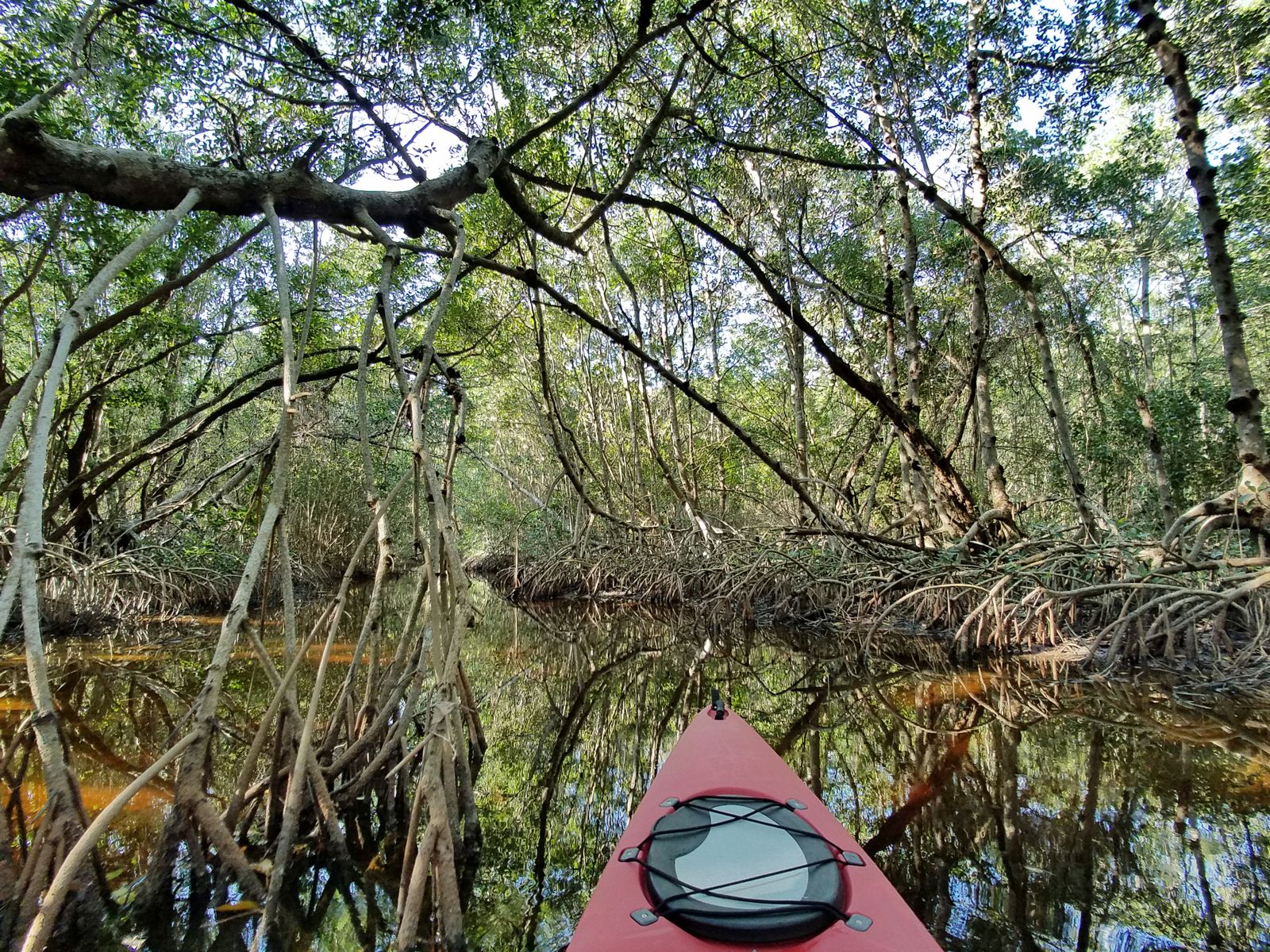
Paddling is the quietest way into the Everglades, and the park says trips range from a few hours to several days. You can bring your own boat, rent one at Flamingo or from businesses in Everglades City, or hire a permitted guide.
Good starting points:
- Nine Mile Pond: a 5-mile loop, with a 3.5-mile shortcut, through shallow grassy marsh and mangrove islands, marked with numbered white poles. Watch for alligators, wading birds and an occasional endangered snail kite. It can be impassable near the end of the dry season when water drops.
- Florida Bay from Flamingo: open water, jumping mullet, feeding birds, and the park’s note that the bay is relatively mosquito-free, even in summer. Not for windy days.
- Sandfly Island Loop, Gulf Coast: 6.5 miles from Everglades City or Chokoloskee, through the edge of the Ten Thousand Islands, with a short hiking trail on the island.
Swimming and snorkeling are prohibited in all canals, ponds, freshwater lakes, marked channels and boat basins in the park. Respect the tides on the coast, carry more water than you think, and give alligators the right of way. Guided mangrove kayak tours, like the ones on our tours page, take care of the route and the gear.
Bike the park
The park has five biking trails. Beyond the Shark Valley loop, the best known is the Long Pine Key trail near the Homestead entrance, 14 miles (22.5 km) round trip on dirt through the pinelands, ending at Pine Glades Lake. Near Flamingo, Rowdy Bend is an overgrown former road through woodland, good for forest birds, and Snake Bight Trail runs 1.6 miles (2.6 km) one way to a boardwalk over the bay, where shorebirds and sometimes flamingos feed at high tide.
In winter, typically December through April, rangers lead bicycle programs, including full-moon rides. Bring repellent for any trail through the trees.
The Gulf Coast and the Ten Thousand Islands
On Florida’s west coast, the Gulf Coast area is the gateway to the Ten Thousand Islands, a maze of mangrove islands and channels that stretches south toward Flamingo. The new Marjory Stoneman Douglas Visitor Center at Everglades City, open daily from 9 a.m. to 5 p.m., opened in 2026; the original was destroyed by Hurricane Irma in 2017 and its temporary replacement by Hurricane Ian in 2022.
Because this part of the park is only accessible by boat, there are two ways in:
- The boat tour. The park lists guided 90-minute tours through the Ten Thousand Islands, offered daily, on a 49-passenger pontoon boat from Everglades City, with stops at historical landmarks along the Barron River.
- Paddling. The visitor center has a public kayak launch for the Sandfly Island Loop and longer routes.
The Gulf Coast pairs well with Naples, and with the cypress country of Big Cypress National Preserve, which the park lists among its nearby attractions.
Rules that catch people out
A few park rules surprise first-time visitors:
- No swimming in canals, ponds, freshwater lakes, marked channels or boat basins.
- No drones anywhere in the park.
- Keep at least 15 feet from alligators and crocodiles. They are more active at night and hunt mostly from dusk to dawn. A basking alligator may not move for hours, but it is not a statue: the only animal statue in the park is a Florida panther outside the Ernest F. Coe Visitor Center.
- Never feed wildlife. Feeding or harassing an animal is a criminal offense that carries a fine.
- Pets are limited to roads, parking lots and campgrounds, not trails.
- Bring food. Snacks are sold at a few places, but the park recommends bringing your own food and drink.
Sample plans
Half a day from Miami: Shark Valley first thing in the morning, either the tram or a rented bike to the tower, then an airboat ride at one of the operators a short drive east on the Tamiami Trail.
A full day from Homestead: the Anhinga and Gumbo Limbo trails early, then Pineland, Pa-hay-okee and Mahogany Hammock on the way south, a stop at Paurotis Pond, an afternoon boat tour at Flamingo, and Eco Pond before driving back.
Two days: day one at Shark Valley and an airboat; day two down the main road to Flamingo, staying at the lodge or campground for sunset and an early paddle at Nine Mile Pond.
From Naples: a morning Ten Thousand Islands boat tour from Everglades City, then the drive east along the Tamiami Trail to Shark Valley.
Season changes the experience more than any of these choices: winter brings the birds, the cooler days and the crowds, summer the heat, storms and mosquitoes. Our guide to Everglades weather and the best time to visit goes month by month, and is the Everglades worth visiting? covers what you will and will not see.